Transit media advertising in Dubai: complete 2026 cost guide covering Metro, taxi, bus, tram, airport, ferry & fleet formats. Rates from AED 3,500 (taxi interior) to AED 220,000+ (Metro train wrap).
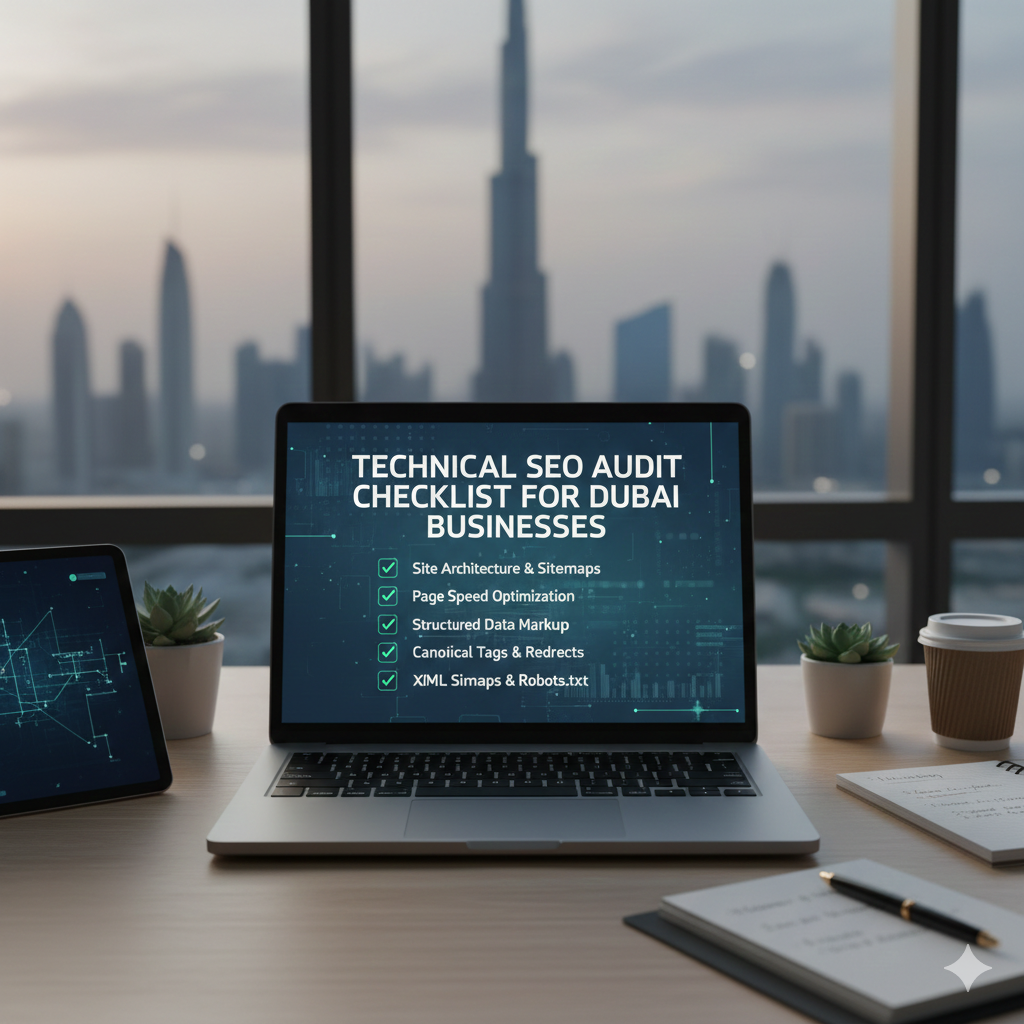
Technical SEO Audit Checklist for Dubai Businesses
Summary:
Ensure your website excels in the UAE market. Use our comprehensive Technical SEO checklist, optimized for AI search and mobile-first indexing in Dubai.
February 20, 2026
Most Dubai businesses invest thousands of dirhams monthly in SEO services without knowing whether their website's technical foundation is actually optimized for search engines. They publish content, build links, and run campaigns—but if the technical SEO infrastructure is broken, none of it delivers the results it should. Slow page speeds, broken mobile experiences, crawl errors, duplicate content, and missing structured data silently hemorrhage traffic and rankings while marketing budgets burn.
A comprehensive technical SEO audit is not optional in 2026—it is foundational. Google's algorithms have become increasingly sophisticated about technical performance, Core Web Vitals are ranking factors, mobile-first indexing is mandatory, and AI-powered search engines parse structured data to generate results. Dubai businesses competing in high-value commercial keywords cannot afford technical SEO weaknesses that hand competitive advantages to rivals who have invested in proper technical optimization.
This guide provides the complete technical SEO audit checklist Dubai businesses need to assess their website health, identify critical issues, prioritize fixes, and implement optimizations that improve rankings, traffic, and conversions. Whether you are auditing your site internally or evaluating an agency's work, this checklist ensures nothing is missed.
Why Technical SEO Matters More in Dubai Than Anywhere Else
Dubai's digital market has unique characteristics that make technical SEO especially critical.
Ultra-Competitive Commercial Keywords
Dubai's real estate, hospitality, automotive, finance, and retail sectors are among the world's most competitive for commercial search terms. When hundreds of businesses compete for 'luxury apartments Dubai Marina' or 'corporate event venues DIFC', technical SEO excellence becomes the tiebreaker between Page 1 and Page 2.
Mobile-First Market
Dubai has one of the world's highest smartphone penetration rates—over 90% of the population uses mobile devices as their primary internet access. Google's mobile-first indexing means your mobile site IS your site. Poor mobile technical performance does not just hurt mobile rankings—it hurts all rankings.
Multilingual Complexity
Dubai businesses serving Arabic and English audiences face technical challenges most markets do not: hreflang implementation, right-to-left CSS, multilingual schema markup, and international targeting signals. Technical errors in multilingual SEO are common and catastrophic.
High User Experience Expectations
Dubai consumers expect premium digital experiences matching the city's luxury positioning. Slow sites, broken mobile experiences, and poor usability drive immediate bounce rates—which Google interprets as poor quality signals, creating a negative ranking spiral.
Technical Reality: A Dubai business with perfect content and backlinks but poor Core Web Vitals, mobile experience, and site architecture will consistently lose rankings to competitors with superior technical SEO foundations—regardless of content quality.
The Complete Technical SEO Audit Checklist
Section 1: Crawlability and Indexability
Search engines must be able to crawl and index your site. This section identifies barriers preventing proper discovery.
Robots.txt Analysis
- Verify robots.txt file exists and is accessible at yourdomain.com/robots.txt
- Confirm critical pages and resources are not blocked
- Check that XML sitemap is referenced in robots.txt
- Ensure no accidental blocking of JavaScript, CSS, or image resources
- Verify User-agent directives are correctly configured
XML Sitemap Audit
- Confirm XML sitemap exists and is submitted to Google Search Console
- Verify all important pages are included in sitemap
- Check that sitemap does not exceed 50MB or 50,000 URLs
- Ensure sitemap uses correct XML formatting with no errors
- Verify lastmod dates are accurate and updated
- Confirm canonical URLs match sitemap URLs
- Check that noindex pages are excluded from sitemap
Meta Robots and Noindex Directives
- Identify all pages with noindex tags and verify intentionality
- Check for conflicting signals (noindex in meta tag but allowed in robots.txt)
- Verify important pages are not accidentally noindexed
- Audit pagination handling (noindex, canonical, or indexable)
Crawl Budget Optimization
- Identify and fix infinite scroll or calendar pagination issues
- Eliminate unnecessary URL parameters
- Review server log files for Googlebot crawl patterns
- Prioritize important pages through internal linking
- Reduce crawl of low-value pages (filters, search results, duplicate content)
Section 2: Site Architecture and Internal Linking
URL Structure
- Verify URLs use clean, descriptive, keyword-rich structures
- Ensure URLs are lowercase and use hyphens (not underscores)
- Confirm URLs are as short as practical while remaining descriptive
- Check that URL parameters are minimized or properly handled
- Verify URLs do not change without proper redirects
Internal Linking Architecture
- Ensure homepage links to all important top-level pages
- Verify important pages are within 3 clicks of homepage
- Check that anchor text is descriptive and varied
- Identify and fix orphaned pages (pages with no internal links)
- Ensure internal links use absolute URLs with proper protocols
- Verify footer and navigation links reach priority pages
Breadcrumb Navigation
- Implement breadcrumb navigation on all applicable pages
- Ensure breadcrumbs reflect site hierarchy accurately
- Add breadcrumb structured data markup
Section 3: Page Speed and Core Web Vitals
Google's Core Web Vitals are confirmed ranking factors. Poor performance costs rankings and conversions.
Core Web Vitals Benchmarks
- Largest Contentful Paint (LCP): Target under 2.5 seconds
- First Input Delay (FID): Target under 100 milliseconds
- Cumulative Layout Shift (CLS): Target under 0.1
- Interaction to Next Paint (INP): Target under 200 milliseconds (replacing FID in 2024)
PageSpeed Optimization Checklist
- Enable browser caching with appropriate cache headers
- Implement server-side caching (Redis, Varnish, or similar)
- Minify CSS, JavaScript, and HTML
- Enable GZIP or Brotli compression
- Optimize and compress all images (WebP format recommended)
- Implement lazy loading for images and videos
- Defer non-critical JavaScript loading
- Eliminate render-blocking resources
- Use a Content Delivery Network (CDN) for static resources
- Optimize server response time (TTFB under 600ms)
Mobile Performance
- Test mobile page speed separately (often slower than desktop)
- Verify mobile site passes Core Web Vitals thresholds
- Ensure tap targets are appropriately sized (48x48 pixels minimum)
- Check that mobile viewport is properly configured
Section 4: Mobile Optimization
Mobile-first indexing means Google predominantly uses your mobile site for ranking. Mobile optimization is non-negotiable.
Mobile-Friendly Testing
- Run Google Mobile-Friendly Test on all important pages
- Verify responsive design works across all device sizes
- Test on actual mobile devices (iOS and Android)
- Ensure all content is accessible without horizontal scrolling
- Verify touch elements are properly spaced
Mobile Usability
- Confirm forms are easy to complete on mobile
- Ensure CTA buttons are large and easily tappable
- Verify navigation menus work smoothly on touch devices
- Check that popups and interstitials comply with Google guidelines
- Test mobile site navigation and user flow
Responsive Design Validation
- Verify images scale properly on all screen sizes
- Ensure text is readable without zooming
- Check that CSS media queries function correctly
- Confirm content parity between mobile and desktop versions
Section 5: HTTPS and Security
SSL/TLS Configuration
- Verify entire site uses HTTPS (not just homepage)
- Confirm SSL certificate is valid and not expired
- Ensure HTTP to HTTPS redirects are in place
- Check for mixed content warnings (HTTP resources on HTTPS pages)
- Verify HSTS (HTTP Strict Transport Security) is enabled
- Test SSL configuration with SSL Labs test
Security Headers
- Implement Content Security Policy (CSP) headers
- Add X-Content-Type-Options: nosniff header
- Configure X-Frame-Options to prevent clickjacking
- Enable X-XSS-Protection header
Section 6: Duplicate Content and Canonicalization
Canonical Tag Implementation
- Verify every page has a self-referencing canonical tag at minimum
- Ensure canonical tags point to correct preferred URLs
- Check that canonical chains do not exist (A→B→C)
- Confirm HTTP canonicalizes to HTTPS version
- Verify www canonicalizes to non-www (or vice versa, consistently)
Duplicate Content Detection
- Identify pages with thin or duplicate content
- Check for URL parameter-generated duplicate pages
- Verify product variations/filters use proper canonicalization
- Ensure pagination is handled correctly (rel=next/prev or canonical)
- Audit for scraped or syndicated content issues
International and Multilingual SEO
- Implement hreflang tags for Arabic and English versions
- Verify hreflang implementation has no errors
- Confirm language/region targeting in Google Search Console
- Ensure each language version has unique, translated content
- Check that Arabic pages have proper RTL directionality
Section 7: Structured Data and Schema Markup
Structured data helps search engines understand your content and powers rich results—critical for Dubai businesses competing for visibility. For local SEO, schema markup is especially important for appearing in local packs and map results.
Schema Implementation Checklist
- Implement Organization schema on homepage
- Add LocalBusiness schema for businesses with physical locations
- Include Product schema on product pages (if e-commerce)
- Add Article/BlogPosting schema to blog content
- Implement FAQ schema where applicable
- Add BreadcrumbList schema to navigation
- Include Review/AggregateRating schema if you have reviews
- Implement Event schema for events
- Add JobPosting schema for careers pages
Schema Validation
- Test all schema markup with Google Rich Results Test
- Verify schema has no errors or warnings
- Check that structured data appears in Google Search Console
- Ensure schema follows latest Schema.org standards
Section 8: Content Quality and On-Page SEO
Title Tags
- Verify every page has a unique, descriptive title tag
- Ensure titles are 50-60 characters (display length)
- Confirm primary keyword appears in title
- Check that title tags are compelling and click-worthy
Meta Descriptions
- Confirm every important page has a unique meta description
- Verify descriptions are 150-160 characters
- Ensure descriptions include target keywords naturally
- Check that descriptions encourage clicks with clear value propositions
Header Tag Structure
- Verify each page has one H1 tag
- Ensure H1 includes primary keyword
- Confirm proper header hierarchy (H1→H2→H3)
- Check that headers are used for structure, not just styling
Content Quality
- Identify thin content pages (under 300 words)
- Check for keyword stuffing or over-optimization
- Verify content is original and valuable
- Ensure content addresses search intent
- Check readability and formatting
Image Optimization
- Verify all images have descriptive alt text
- Ensure image file names are descriptive
- Confirm images are compressed and optimized
- Check that images use next-gen formats (WebP, AVIF)
- Verify important images have proper dimensions specified
Section 9: JavaScript and Rendering
JavaScript SEO
- Verify Googlebot can render JavaScript content
- Test that critical content loads without JavaScript
- Ensure important links are in HTML (not only in JS)
- Check that lazy-loaded content is properly implemented
- Verify server-side rendering or prerendering for critical pages
Single Page Applications (SPA)
- If using React/Vue/Angular, implement dynamic rendering
- Ensure URLs change properly with navigation
- Verify meta tags update dynamically
- Test that Googlebot sees content as users do
Section 10: Technical Health Monitoring
Google Search Console Audit
- Review Coverage report for indexing errors
- Check for manual actions or security issues
- Analyze Core Web Vitals report
- Review Mobile Usability report
- Check for enhancement reports (breadcrumbs, structured data)
- Monitor crawl stats and errors
Server and Hosting
- Verify server uptime is 99.9%+ consistently
- Check server response codes (200s are good, fix 4xx and 5xx)
- Ensure server can handle traffic spikes
- Verify hosting location or CDN serves Dubai region efficiently
404 Error Management
- Identify all 404 errors from Search Console
- Implement 301 redirects for important broken URLs
- Create a helpful 404 page with navigation
- Monitor for new 404s regularly
Redirect Audit
- Map all redirects and identify redirect chains
- Fix redirect chains (A→B→C should be A→C)
- Ensure redirects are 301 (permanent), not 302 (temporary)
- Verify redirects preserve link equity
Dubai-Specific Technical SEO Considerations
Arabic Language Implementation
- Verify Arabic pages use proper lang='ar' attribute
- Ensure CSS properly handles RTL (right-to-left) text direction
- Test that Arabic characters display correctly across browsers
- Confirm Arabic content is properly indexed (not treated as duplicate)
Local Search Optimization
- Implement NAP (Name, Address, Phone) schema markup
- Ensure Google Business Profile is claimed and optimized
- Add location-specific pages for multiple Dubai zones if applicable
- Include Dubai in meta titles and content where natural
UAE Market Technical Requirements
- Verify compliance with UAE content regulations
- Ensure privacy policy meets UAE data protection standards
- Check that payment gateways comply with local requirements (if e-commerce)
Technical SEO Tools for Dubai Businesses
Essential Audit Tools
- Google Search Console: Primary monitoring and diagnosis tool
- Screaming Frog SEO Spider: Comprehensive crawling and technical analysis
- Google PageSpeed Insights: Core Web Vitals and performance testing
- GTmetrix: Detailed performance analysis
- Ahrefs Site Audit: Technical SEO and backlink analysis
- SEMrush Site Audit: Competitor analysis and technical health
- Google Mobile-Friendly Test: Mobile optimization validation
- Google Rich Results Test: Schema markup testing
- SSL Labs Test: SSL/TLS security analysis
Browser Developer Tools
- Chrome DevTools: Performance profiling and debugging
- Lighthouse: Automated auditing for performance, accessibility, SEO
- Network tab: Analyze resource loading and bottlenecks
How to Prioritize Technical SEO Fixes
Not all technical issues have equal impact. Here is how to prioritize your fixes for maximum ROI.
Critical Priority (Fix Immediately)
- Entire site not indexed or massive indexation drops
- HTTPS not implemented or certificate expired
- Mobile site completely broken or unusable
- Core Web Vitals failing on majority of pages
- Critical pages blocked by robots.txt
- Severe security vulnerabilities
High Priority (Fix Within 2 Weeks)
- Slow page speed affecting user experience
- Broken mobile experience on key pages
- Duplicate content issues affecting rankings
- Missing or incorrect canonical tags
- Hreflang errors causing language targeting issues
- Major crawl errors affecting important pages
Medium Priority (Fix Within 30 Days)
- Missing schema markup opportunities
- Suboptimal internal linking structure
- 404 errors on moderate-traffic pages
- Image optimization opportunities
- Minor mobile usability issues
Low Priority (Fix When Possible)
- Minor redirect chain optimizations
- Cosmetic URL structure improvements
- Optional schema enhancements
- Advanced performance micro-optimizations
How DataMySite Delivers Technical SEO Excellence
At DataMySite, technical SEO is the foundation of every campaign we run. Our approach combines automated AI-powered auditing with human expertise to identify, prioritize, and fix technical issues that hold back Dubai businesses from reaching their organic search potential.
Our Technical SEO Audit Process
- Comprehensive 200+ point technical audit using enterprise tools
- AI-powered issue detection and prioritization
- Dubai market-specific Arabic/English technical optimization
- Core Web Vitals optimization and monitoring
- Mobile-first implementation and testing
- Schema markup strategy and implementation
- Monthly technical health monitoring and reporting
Integration with Broader Marketing
What makes DataMySite different is our integration of technical SEO with outdoor advertising, digital marketing, and lead generation. Technical SEO ensures your site converts the traffic we drive through billboards, taxi ads, and digital campaigns—creating a complete marketing ecosystem that purely digital agencies cannot match.
Frequently Asked Questions: Technical SEO in Dubai
How long does a technical SEO audit take?
A comprehensive technical audit for a medium-sized business website takes 5-10 business days. Enterprise sites with thousands of pages may require 2-3 weeks. Implementation of fixes typically takes 30-90 days depending on complexity and developer resources.
How much does technical SEO cost in Dubai?
One-time technical audits range from AED 5,000 to AED 25,000 depending on site size and complexity. Ongoing technical SEO maintenance typically costs AED 3,000 to AED 15,000 monthly as part of broader SEO services. Investment should be evaluated based on traffic value and competitive positioning.
Can I do technical SEO myself or do I need an agency?
Basic technical SEO (titles, meta descriptions, image optimization) can be done in-house if you have technical resources. However, advanced technical SEO (Core Web Vitals optimization, JavaScript rendering, complex schema implementation, hreflang configuration) typically requires specialist expertise to avoid costly mistakes.
How often should I run technical SEO audits?
Quarterly audits are recommended for active sites. Monthly monitoring of critical metrics (Core Web Vitals, indexation, crawl errors) through Google Search Console is essential. Major audits should follow any site migration, redesign, or platform change.
Do technical SEO fixes guarantee ranking improvements?
Technical SEO fixes remove obstacles preventing proper rankings—they create the foundation for success but do not guarantee top rankings alone. Think of technical SEO as necessary but not sufficient. You also need quality content, authoritative backlinks, and strong user signals to rank competitively in Dubai's market.
Final Thoughts: Technical SEO as Competitive Advantage
Technical SEO is not glamorous. It does not generate immediate traffic spikes. It requires investment in expertise, tools, and implementation. But in Dubai's ultra-competitive digital market, technical SEO excellence is what separates Page 1 from Page 2, 2-second load times from 6-second abandonment rates, and properly indexed content from invisible pages.
The businesses dominating Dubai search results in 2026 are those that have invested in rock-solid technical SEO foundations—fast, mobile-optimized, properly structured, and continuously monitored. Use this checklist to audit your site, identify weaknesses, and build the technical excellence that organic search success requires.
DataMySite is ready to help you achieve technical SEO excellence through comprehensive auditing, expert implementation, and ongoing monitoring. Visit datamysite.com or contact our team to begin your technical transformation.
Get Your Technical SEO Audit — Contact DataMySite
Get in touch with our technical SEO team for a comprehensive 200+ point audit, priority fix roadmap, and implementation support.
📞 Phone: +971 52 528 7259
📧 Email: contact@datamysite.com
📍 Address: Office 205, Al Bayan Building, Dubai Investment Park, Dubai – UAE
Related Services & Resources from DataMySite:
→ Digital Marketing Services Dubai
→ Local SEO Services for Small Businesses
→ Quality Lead Generation Dubai Guide
Related Articles

Transit Media Advertising Dubai — Complete Cost Guide 2026
Published On - October 12, 2026

Bridge Banner Advertising Dubai — Costs, Locations & Campaign Guide 2026
Published On - October 12, 2026
Bridge banner advertising in Dubai starts from AED 25,000/month. Complete guide to prime bridge locations (Al Safa, Business Bay), format sizes, permit requirements, and 2026 rates.

Unipole Advertising Dubai — Sheikh Zayed Road Billboard Rates 2026
Published On - October 12, 2026
Unipole advertising in Dubai starts from AED 45,000/month. Complete guide to SZR unipole rates (AED 75,000–220,000), prime highway locations, digital vs static, and booking process 2026.




Before You Leave
Get a Free Strategy
From Dubai's Top Ad Agency
Our experts respond in 60 min — no commitment, no cost.
D
Ava · datamysite
Usually replies instantly
Powered by Claude · DataMySite