Influencer posts cost AED 500 to 250,000 in the UAE. Here is the five-step method we use to measure what they return, with a worked example and the formula.
China Marketing Strategy for UAE Brands: Full Guide
Summary:
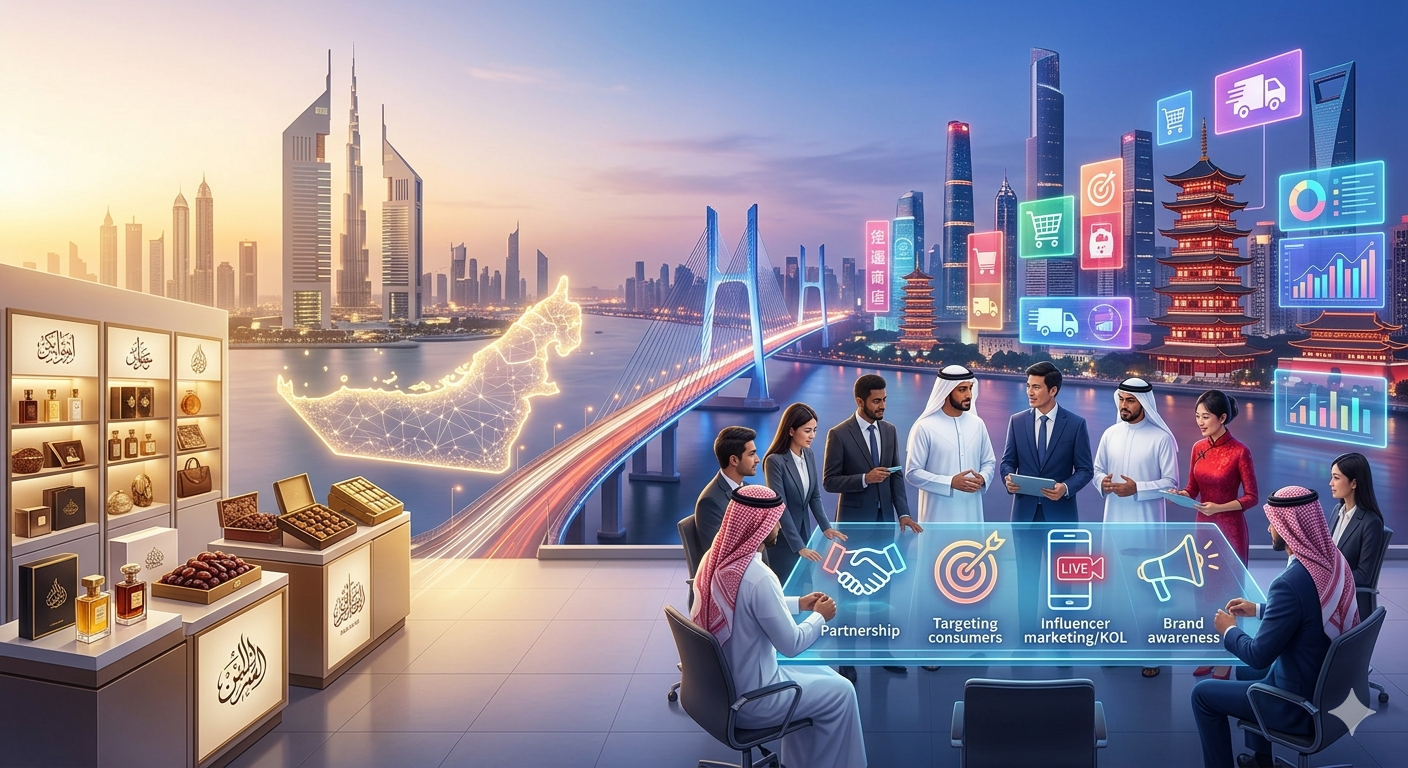
Learn how UAE brands can enter the Chinese market through airport advertising, and localised digital strategies with DataMySite's China marketing expertise.
March 16, 2026
The Opportunity That Most UAE Brands Are Still Underestimating
China represents 1.4 billion consumers, over 1.2 billion active internet users, and some of the highest per-traveller spending figures of any nationality in the world. For UAE brands in real estate, tourism, hospitality, luxury retail, education, and healthcare, this is not a distant future opportunity — it is an actively expanding commercial relationship that is already reshaping how Dubai positions itself globally.
Chinese travellers rank consistently among the highest-spending visitor groups to the UAE. Chinese investors represent a significant and growing share of Dubai's property market. And Chinese students, medical tourists, and business professionals are increasingly looking to the UAE as a destination of choice for education, healthcare, and professional relocation. The commercial case for UAE brands investing in China marketing is not speculative — it is evidenced by the billions of dirhams in Chinese spending that flow through the UAE economy every year.
The challenge is not the opportunity. The challenge is the approach. China's marketing ecosystem operates on entirely different rules from every other market a UAE brand has likely navigated. The platforms are different, the regulations are different, the cultural expectations are different, and the strategies that generate results in Dubai, London, or New York will not simply translate. This guide covers everything a UAE brand needs to understand to build a China marketing strategy that actually works — from the platforms that matter to the formats that convert, with the cultural intelligence and regulatory awareness that separates brands that succeed in China from those that waste budget without traction.
Why the Standard Digital Marketing Playbook Fails in China
The Great Firewall Changes Everything
The single most important fact a UAE brand must understand before attempting any China marketing activity is this: Google, Facebook, Instagram, YouTube, Twitter/X, WhatsApp, and most Western digital platforms do not operate in China. The Great Firewall — China's internet regulatory system — blocks access to these platforms for users within mainland China, creating an entirely distinct digital ecosystem with its own dominant platforms, its own advertising infrastructure, and its own rules for brand participation.
This means that:
- Your Google Ads campaigns reach zero Chinese consumers in mainland China
- Your Instagram content is invisible to Chinese users
- Your Facebook advertising budget produces no results in the Chinese market
- Your WhatsApp-based CRM cannot communicate with Chinese customers
A UAE brand that attempts to enter the Chinese market using its standard digital toolkit is essentially invisible to the audience it is trying to reach. Effective China marketing requires a completely different platform strategy built around the channels that Chinese consumers actually use — and the local expertise to navigate them correctly.
Cultural Localisation Is Not Optional
Beyond the platform differences, Chinese consumers respond to marketing through a specific cultural lens that requires genuine adaptation — not just translation. Key cultural principles that must inform a UAE brand's China marketing strategy include:
- Social proof and authority signals: Chinese consumers place extremely high weight on endorsements from respected figures, verified brand accounts, and community consensus. A brand that appears unknown or unverified in the Chinese digital ecosystem is treated with scepticism regardless of its standing elsewhere.
- Visual language and aesthetics: Chinese design preferences for advertising tend toward richer visual environments, specific colour associations (red for prosperity, gold for premium, white used carefully given funeral associations), and a more information-dense aesthetic than Western minimalism.
- Festival and calendar alignment: China's commercial calendar — Lunar New Year, National Day Golden Week, the Qixi Festival, the 11.11 Shopping Festival — represents enormous marketing opportunity for brands that plan around these peak demand moments. Brands that ignore them miss the windows when Chinese consumer intent is highest.
- Trust through credibility proof: Chinese consumers extensively research purchases, particularly high-value ones. A UAE property developer or tourism brand that lacks Chinese-language content, Chinese platform presence, and verifiable credentials faces an uphill trust battle regardless of its real-world reputation.
Chat With Us on WhatsApp Have a quick question? Message our team directly — we reply fast.
The Chinese Digital Platforms UAE Brands Must Understand
WeChat — The Non-Negotiable Foundation
What it is: WeChat is China's dominant all-in-one platform — messaging, social media, payment, mini-programs, and brand content all in one application. With over 1.3 billion monthly active users, it is not optional for any brand seriously targeting Chinese consumers.
Why it matters for UAE brands:
- Chinese travellers planning overseas trips, including UAE visits, use WeChat extensively for research, booking inquiries, and peer recommendations
- WeChat Official Accounts allow brands to publish content, run campaigns, send notifications, and build a subscriber base directly within the platform
- WeChat Mini Programs enable brands to run e-commerce, bookings, and lead capture within the app without requiring the user to leave the platform
- WeChat Pay integration is essential for any UAE business wanting to accept payment from Chinese visitors in a format they are familiar with and trust
Key activation for UAE brands:
- Set up a verified WeChat Official Account (Subscription Account for content-led brands, Service Account for transactional brands)
- Publish consistent Mandarin-language content aligned to the Chinese consumer's decision journey
- Use WeChat Mini Programs for property enquiry forms, tourism bookings, or product catalogues
Weibo — Awareness and Influencer Amplification
What it is: Weibo is China's dominant public social media platform — open, discoverable, and used by brands, celebrities, and KOLs (Key Opinion Leaders) to build public visibility. It functions similarly to Twitter/X in its open broadcast model.
Why it matters for UAE brands:
- Weibo is where trending topics, brand announcements, and influencer collaborations reach the broadest public audience
- KOL partnerships on Weibo deliver reach to hundreds of thousands of followers with a single post
- It is an essential awareness channel for UAE real estate developers, tourism boards, and luxury brands wanting broad Chinese market exposure
Baidu — China's Search Engine
What it is: Baidu is China's dominant search engine with over 60% market share. Chinese consumers use Baidu to research destinations, investigate property investments, compare education options, and discover brands.
Why it matters for UAE brands:
- A UAE brand that does not appear in Baidu search results when a Chinese consumer searches for Dubai real estate, UAE tourism, or relevant product categories is effectively invisible during the research phase of the purchase decision
- Baidu PPC (Pay-Per-Click) advertising allows brands to appear at the top of search results for specific Mandarin keywords targeting Chinese consumers with direct purchase intent
- Baidu SEO — optimising Chinese-language website content for Baidu's ranking algorithm — builds sustainable organic visibility for brands with a long-term China strategy
Xiaohongshu (Little Red Book) — The Discovery and Lifestyle Platform
What it is: Xiaohongshu (also known as RED or Little Red Book) is China's fastest-growing lifestyle discovery platform, combining Instagram-style visual content with product reviews, travel guides, and purchase recommendations. It has over 300 million monthly active users and is particularly dominant among affluent urban Chinese women aged 18 to 35.
Why it matters for UAE brands:
- Dubai travel content performs exceptionally well on Xiaohongshu — UAE tourism destinations, hotels, dining experiences, and luxury shopping consistently attract high organic engagement on the platform
- Product reviews and brand "seeding" (organic placement of brand content through authentic user posts) drive purchasing decisions for luxury goods, beauty products, and premium services
- Chinese influencers — called KOLs (Key Opinion Leaders) or KOCs (Key Opinion Consumers) — build highly trusted product recommendation content that directly drives purchase behaviour
- A UAE hotel, real estate project, or luxury brand with a presence on Xiaohongshu reaches exactly the high-spending, aspirational Chinese consumer most likely to visit Dubai, invest in UAE property, or purchase premium products
Douyin (TikTok China) — Short Video Dominance
What it is: Douyin is the Chinese version of TikTok — but they operate as separate platforms with separate content ecosystems. Douyin has over 700 million daily active users and is China's dominant short-video platform for brand storytelling, entertainment, and discovery.
Why it matters for UAE brands:
- Short video content showcasing Dubai's luxury experiences, real estate projects, and lifestyle appeal reaches enormous audiences through Douyin's powerful algorithmic distribution
- Douyin advertising — pre-roll video, brand challenges, and native content formats — delivers high-impact awareness to targeted demographic segments
- KOL video collaborations on Douyin create authentic content that travel and lifestyle-oriented Chinese consumers engage with and share, amplifying campaign reach organically
Airport Advertising in China: Reaching High-Value Audiences Before They Fly
One of the most powerful and strategically underutilised China marketing channels for UAE brands is advertising in China's major international airports. China's airports are among the busiest in the world — Beijing Capital, Shanghai Pudong, Guangzhou Baiyun, and Shenzhen Bao'an collectively process tens of millions of passengers monthly, with a significant proportion consisting of outbound travellers, business professionals, and affluent consumers whose profile maps precisely onto the target audiences of UAE real estate, tourism, and luxury brands.
Why Chinese Airport Advertising Works for UAE Brands
- Captive, affluent audience: Airport visitors — particularly those using international terminals and business lounges — represent a high-income, internationally mobile demographic that is disproportionately relevant for luxury, real estate, and premium travel brands
- Pre-departure influence window: A Chinese traveller considering a UAE visit, property investment, or education decision who encounters persuasive brand messaging at a Chinese airport is being reached at exactly the right decision-making moment — with destination in mind and travel underway
- Premium brand context: Airport advertising positions UAE brands alongside other international premium brands in an environment that signals credibility and global stature
- High dwell time: Travellers spend significant time in airports — browsing, waiting, and absorbing advertising with a level of attention rarely available in commuter or street-level environments
Airport Advertising Formats Available in China
- Large-format digital LED screens — Terminal concourse and gate area displays delivering high-visibility video and static campaign content to the full passenger flow
- LED video walls — Dramatic, large-scale installations in arrivals and departures halls creating immersive brand moments
- VIP lounge and business class area branding — Premium placement reaching the highest-net-worth traveller segment in an exclusive, low-clutter environment
- Baggage claim area displays — Unavoidable exposure during the high-dwell baggage collection period
- Interactive digital kiosks — Touchpoint installations enabling brand engagement, lead capture, and content delivery in high-traffic zones
- Static lightbox and billboard placements — Cost-efficient sustained presence across terminal environments
Which UAE Brands Benefit Most from Chinese Airport Advertising
- Real estate developers promoting off-plan and investment properties to outbound Chinese investors
- Dubai Tourism and hospitality brands building destination awareness among Chinese leisure travellers
- UAE universities and education providers targeting Chinese students and families
- Luxury retail brands building aspiration and brand recognition among premium consumer travellers
- Healthcare providers reaching Chinese medical tourism prospects
The 6-Step China Marketing Strategy for UAE Brands
Step 1: Define Your Chinese Target Audience Precisely
China is not a monolithic market. Effective China marketing begins with identifying exactly which Chinese consumer segment is most relevant to your brand's product or service. The key audience segments for UAE brands include:
- Outbound tourists: Chinese leisure travellers planning international trips, for whom Dubai is an increasingly aspirational destination
- Property investors: High-net-worth Chinese individuals seeking overseas real estate investment, for whom Dubai's freehold property market, tax advantages, and Golden Visa programme are highly compelling
- Students and education families: Chinese students and parents considering UAE universities and private schools
- Business professionals and entrepreneurs: Chinese business travellers and entrepreneurs with commercial interests in the UAE
- Medical tourists: Chinese individuals seeking specialist healthcare in UAE facilities
Each segment uses different platforms, responds to different content, and requires different messaging architecture. Trying to reach all of them with a single undifferentiated campaign is one of the most common and costly mistakes UAE brands make in China.
Step 2: Build Your Chinese Platform Infrastructure
Before running any campaigns, establish the foundational platform presence that gives Chinese audiences somewhere to land and engage:
- WeChat Official Account: Verified brand account with consistent Mandarin-language content
- Weibo Account: Brand profile with regular posts and campaign content
- Xiaohongshu Brand Account: Product and experience content optimised for the platform's discovery algorithm
- Baidu-indexed Chinese website: A localised (not just translated) Chinese-language version of your website, hosted or mirrored for Baidu indexing
- Douyin Brand Account: Short video content library building platform presence
Step 3: Localise — Do Not Just Translate
Localisation is the difference between content that converts and content that confuses. Effective localisation for Chinese audiences involves:
- Native Mandarin copywriting by writers who understand cultural context, not machine translation or basic translation services
- Visual adaptation — redesigning creative assets to align with Chinese aesthetic preferences, colour psychology, and visual communication conventions
- Cultural calendar alignment — planning campaigns around Lunar New Year, Golden Week, and other major Chinese commercial moments
- Testimonials and social proof from Chinese sources — featuring reviews, endorsements, and case studies that resonate with Chinese audiences' specific trust criteria
Step 4: Execute KOL Partnerships Strategically
KOL (Key Opinion Leader) marketing is one of the most powerful conversion mechanisms in China, particularly for high-consideration purchases like real estate and premium travel. The right KOL partnership places your brand in front of a highly trusting, highly engaged audience through a credible, familiar voice.
KOL selection criteria for UAE brands:
- Follower demographic alignment with your target Chinese consumer segment
- Platform presence on the channels most relevant to your category (Xiaohongshu for lifestyle and travel, Weibo for broad awareness, Douyin for video reach)
- Content quality and authentic brand storytelling capability
- Engagement rate versus raw follower count (Chinese KOL market has significant follower inflation issues requiring careful audience authenticity verification)
Step 5: Run Paid Advertising on Chinese Platforms
Organic presence builds foundation; paid advertising drives scale and speed. The primary paid channels for UAE brands in China are:
- Baidu PPC: Search ads targeting high-intent Mandarin keywords ("Dubai property investment", "UAE tourism", "Dubai hotel booking")
- WeChat Moments Ads: Native advertising in the WeChat social feed, targeted by demographics, interests, and location
- Weibo Promoted Posts: Boosted content reaching targeted audiences beyond organic followers
- Douyin In-Feed Ads and TopView: Video advertising reaching Douyin's massive daily active user base
- Xiaohongshu Sponsored Content: Native brand promotion within the platform's discovery feed
Step 6: Intercept Chinese Audiences at UAE Touchpoints
An important but often overlooked dimension of China marketing for UAE brands is reaching Chinese visitors and travellers once they are already in the UAE. This means:
- Hotel digital screen advertising in Dubai and Abu Dhabi properties with high Chinese guest volumes — reaching Chinese tourists in the hotel environment where they are making decisions about activities, shopping, and experiences
- Airport advertising at Dubai International Airport — intercepting Chinese visitors on arrival with brand messaging and destination guidance in Mandarin
- WeChat QR codes and Chinese-language collateral at retail, hospitality, and real estate sales environments
- UnionPay and WeChat Pay acceptance to remove friction from the Chinese visitor purchasing experience
Industries with the Strongest China Marketing ROI for UAE Brands
1. Real Estate and Property Development
The ROI case for Chinese-targeted real estate marketing is exceptionally strong. Chinese buyers represent one of Dubai's most significant international investor segments, and their purchase motivations — asset diversification, UAE Golden Visa access, lifestyle investment, and portfolio growth — align closely with Dubai's property market strengths. A Baidu PPC campaign targeting "Dubai property investment" or a Xiaohongshu content strategy showcasing premium development lifestyle generates qualified leads from an audience that is actively ready to consider significant financial commitments.
2. Tourism, Hospitality, and Experiences
Dubai as a destination resonates powerfully with Chinese travel aspirations — luxury, spectacle, shopping, and safety in a condensed, convenient package. Tourism brands, hotels, experience operators, and destination management companies benefit enormously from Douyin video content and Xiaohongshu discovery posts that showcase Dubai's most visually compelling and aspirational experiences to travel-minded Chinese audiences.
3. Luxury Retail and Fashion
Chinese consumers are among the world's most prolific luxury buyers, and many of their premium purchases occur during international travel. UAE luxury retailers and brands that establish Chinese platform presence and KOL partnerships reach a buyer who is actively seeking luxury purchase opportunities during their UAE visit.
4. Education
Chinese families with children seeking international education pathways are an important and growing audience for UAE universities, international schools, and professional education providers. Baidu SEO for education-relevant keywords and WeChat content targeting Chinese parent communities drives enquiries from this motivated, research-intensive audience segment.
5. Healthcare and Medical Tourism
Chinese medical tourists increasingly look to UAE healthcare facilities for specialist treatments, health checks, and wellness programmes. Chinese-language content on Baidu and WeChat, supported by verified testimonials from Chinese patients, builds the trust required for a market where credibility signals are everything.
The Biggest Mistakes UAE Brands Make in China Marketing
- Using Western platforms to target mainland Chinese consumers — completely ineffective due to the Great Firewall
- Relying on machine translation instead of native Mandarin localisation — immediately detectable by Chinese audiences and severely damaging to brand credibility
- Running a single campaign across all platforms without audience differentiation — different Chinese platforms serve different consumer segments and content formats; a one-size approach underperforms across all of them
- Ignoring the Chinese commercial calendar — missing Lunar New Year, Golden Week, and 11.11 wastes the windows when Chinese consumer intent peaks
- Selecting KOLs based on follower count alone — without audience authenticity verification, high follower counts can represent inflated metrics with minimal genuine reach
- Treating China as a single market — regional differences between Shanghai, Beijing, Chengdu, Guangzhou, and Tier 2 cities in consumer preferences, platform usage, and purchasing behaviour are significant and require tailored approaches for meaningful penetration
Start Your China Marketing Campaign with DataMySite
DataMySite's China marketing service provides UAE brands with a complete entry and growth strategy covering Chinese airport advertising, platform setup across WeChat, Weibo, Baidu, Xiaohongshu, and Douyin, KOL identification and partnership management, Mandarin-language content creation, paid advertising campaign management, and full performance tracking with ROI reporting.
Our partnerships with certified Chinese digital agencies and airport advertising networks give UAE brands direct access to premium Chinese market placements — managed seamlessly from Dubai with the local Chinese expertise and regulatory compliance that successful market entry demands.
Whether you are a real estate developer targeting Chinese investors, a hospitality brand building tourism from China, or a luxury retailer reaching high-spending Chinese visitors, contact DataMySite today for a custom China marketing strategy built around your brand's specific goals and audience.
Related Articles

Influencer Marketing ROI: How We Measure It for UAE Clients
Published On - October 22, 2026
PR vs Advertising vs Paid Media: Where Each Dirham Works Hardest
Published On - October 22, 2026
PR from AED 5,000 a month, outdoor from AED 1,500, digital screens from AED 8,000. What each one is for, what it costs in 2026 and how to split a Dubai budget.
How to Measure PR Success: The 6 Numbers We Report Monthly
Published On - October 22, 2026
A PR retainer in Dubai costs AED 5,000 to 100,000 a month. These are the six numbers we report every month to show whether it is working, and the one we refuse to use.




Before You Leave
Get a Free Strategy
From Dubai's Top Ad Agency
Our experts respond in 60 min — no commitment, no cost.
D
Ava · datamysite
Usually replies instantly
Powered by Claude · DataMySite