Influencer posts cost AED 500 to 250,000 in the UAE. Here is the five-step method we use to measure what they return, with a worked example and the formula.
Dubai Mall Digital Screens: Complete Ad Guide
Summary:
Discover how Dubai Mall digital screens can elevate your brand. Explore ad formats, costs, placements & tips to maximize ROI in the UAE's top retail hub.
March 15, 2026
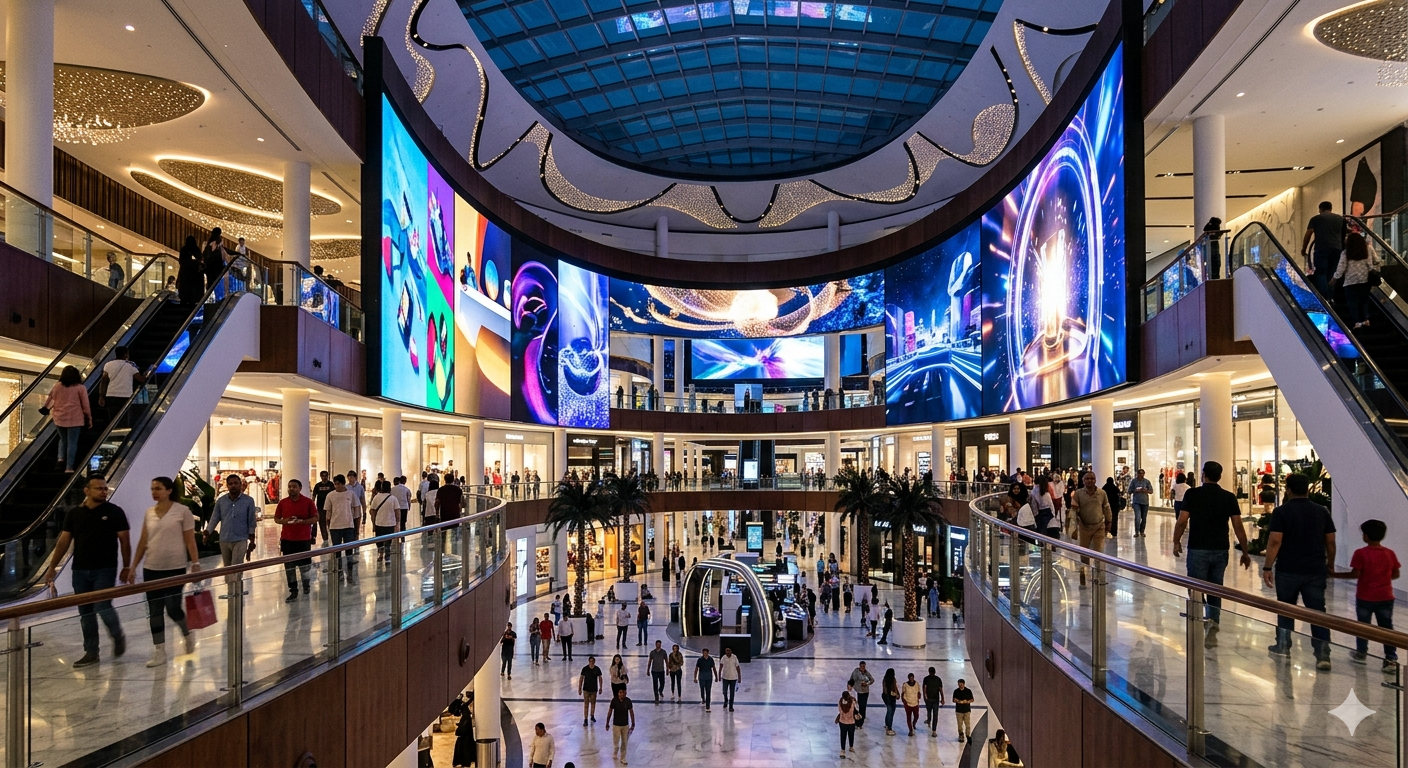
If you have ever walked through The Dubai Mall, Mall of the Emirates, or City Centre Deira and found yourself stopping mid-stride to watch a brand's video playing on a large, bright digital screen — you already understand, intuitively, what makes mall digital screen advertising so effective. You were not sitting in front of a TV trying to skip an ad. You were not scrolling past a sponsored post on your phone. You were simply present, moving through a high-energy retail environment, and the screen caught your eye without asking your permission. That involuntary, undivided moment of attention is precisely what brands are buying when they invest in DOOH advertising inside Dubai's world-class shopping destinations.
Dubai's malls are not just retail venues. They are some of the most visited, most photographed, and most commercially dense environments on the planet. The Dubai Mall alone welcomes tens of millions of visitors annually — a footfall figure that rivals many of the world's most visited tourist attractions. For advertisers, that volume of engaged, consumer-minded, purchasing-intent visitors flowing through a controlled indoor environment every single day represents one of the most concentrated and commercially valuable audiences available anywhere in the UAE market. This guide covers everything you need to know about how Dubai mall digital screens work as an advertising format, what makes them perform, and how to build a campaign that actually converts that footfall into brand outcomes.
What Is DOOH Advertising and Why Does the Mall Environment Make It So Powerful?
DOOH stands for Digital Out-of-Home advertising — a broad category that covers any digital screen placed in a public or semi-public space to display advertising content. It includes roadside LED billboards, transit screens, petrol station digital screens, digital unipoles along highways, and — most relevantly for this guide — the large-format and mid-format digital displays placed throughout Dubai's shopping malls.
What separates DOOH from its static predecessor — traditional billboards and printed signage — is the flexibility, intelligence, and visual impact of the medium. DOOH screens can run full-motion video with audio, update their content in real time based on time of day, day of the week, or external triggers like weather and events, and switch between multiple campaigns on a scheduled rotation without any physical production or installation work. For a brand running a time-sensitive promotion, launching a new product, or wanting to push different messages to morning and evening mall audiences, this flexibility is transformational compared to the print-and-post static formats of the past.
The mall environment specifically amplifies these advantages in several important ways. First, the audience is self-selected and commercially motivated — people visit malls because they intend to shop, dine, or be entertained, which means their purchase intent is already activated before your ad ever reaches them. Second, malls are climate-controlled, comfortable, and designed for extended dwell time — the average Dubai mall visit runs well over an hour, meaning there are multiple opportunities for a shopper to encounter your brand message across different screen placements throughout their visit. Third, the absence of competing outdoor distractions — no traffic, no weather, no rival signage immediately competing for the same sightline — means your ad content has a cleaner, more focused visual context than most outdoor DOOH placements.
The Geography of a Dubai Mall DOOH Campaign: Location by Location
Not all screen placements within a mall deliver the same commercial value, and understanding the distinct audience dynamics of each zone is essential to building a campaign that performs. DOOH advertising in Dubai malls operates across several distinct placement categories, each with its own footfall characteristics, dwell patterns, and audience mindset.
Main atrium and grand entrance screens are the flagship placements in any major Dubai mall. The central atrium spaces — the iconic multi-storey caverns of light and movement that anchor malls like The Dubai Mall and Mall of the Emirates — channel the highest combined footfall of any single zone in the building. Screens in atrium positions typically run as large-format LED installations visible from multiple floors and from considerable distances within the open space. The audience here is maximally diverse: families, tourists, business visitors, residents, and every demographic combination the UAE's cosmopolitan population represents. For brands prioritising broad awareness — a new product launch, a seasonal campaign, a brand refresh — atrium screen placements deliver scale and visual impact that is difficult to match anywhere else in the indoor advertising landscape.
Retail corridor and shop-front adjacent screens deliver a different but equally valuable proposition. Positioned alongside the primary retail corridors where shoppers move between stores, these screens reach an audience that is actively engaged with the retail environment and making purchase decisions in real time. A fashion brand advertising on a corridor screen directly opposite a competing retailer is intercepting a shopper at the precise moment they are weighing their options. A restaurant or café brand advertising near the food court entrance is reaching diners just before they commit to a table. The proximity between screen placement and point of purchase is tighter here than in almost any other advertising context, and the commercial implications of that proximity are significant.
Leisure and entertainment zone screens — around cinema complexes, aquariums, indoor theme parks, and leisure attractions — capture an audience in a highly receptive, relaxed, and experience-oriented state. These visitors are in entertainment mode, they have discretionary budget to spend, and they are typically with family or social groups making collective decisions about where to eat, what to buy, and what to do next. Lifestyle brands, experience-based services, dining establishments, and premium retail find that leisure zone placements generate particularly strong brand recall and purchase consideration metrics.
Food court and dining zone screens combine high dwell time with a captive, stationary audience that has nowhere else to look. Shoppers seated for a meal at a mall food court are present in that physical space for an average of 15 to 30 minutes — far longer than they are stationary in front of any other screen placement in the building. That extended exposure window means that a brand's ad is not just seen once but encountered multiple times across a single dining visit. For brand awareness campaigns where frequency is a key driver of recall, food court screen placements are among the most cost-effective inventory in the mall advertising ecosystem.
Car park and entry/exit zone screens capture audiences at the bookend moments of the mall visit — arrival and departure — when attention is briefly paused in transition. These placements work particularly well for brands wanting to land a simple, high-frequency message, for time-sensitive promotions, and for lead generation campaigns where a call-to-action can be registered before the shopper leaves the environment.
The Technical Advantages That Make Mall DOOH Campaigns Smarter
One of the most significant developments in DOOH advertising over recent years is the increasing sophistication of the technology that governs how and when content is delivered. Dubai's premium mall screen networks have been at the forefront of this evolution in the GCC, and the capabilities now available to advertisers go well beyond simple video playback on a loop.
Day-parting and time-based content triggers allow brands to run entirely different creative executions depending on the time of day, without any manual intervention after the initial campaign setup. A quick-service restaurant brand can push a breakfast promotion on atrium screens from 9am to 11am, switch to a lunch offer from 12pm to 2pm, and transition to a dinner highlight reel from 6pm onwards — all from a single campaign booking. This kind of dynamic, time-responsive messaging generates significantly higher relevance and engagement than a static message running the same creative around the clock.
Weather and event-based triggers take this a step further. Because Dubai's malls see distinct footfall patterns based on weather (when it is extremely hot outdoors, mall traffic spikes), and because many major malls host events, exhibitions, and seasonal activations, campaigns can be programmed to increase display frequency or switch creative during specific high-traffic windows. A brand whose target audience peaks during mall-hosted events can ensure their campaign runs at maximum intensity precisely when those audiences are in the building.
Real-time content integration — pulling live data into screen content such as countdown timers for flash sales, live social media feeds, current prices or offers, and live event information — transforms a passive display into a dynamic, interactive-feeling touchpoint that commands attention far more effectively than static video. Audiences that have grown accustomed to filtering out repetitive advertising content engage noticeably more with content that demonstrates real-time relevance.
Anonymous audience measurement using sensor technology and mobile signal data provides advertisers with genuine impression reporting — not estimates based on footfall assumptions but actual measurements of how many people were within the viewing cone of the screen during the campaign period. This data transparency is one of the reasons DOOH advertising has grown so strongly as a preferred format among UAE brands that have moved away from traditional outdoor where measurement was largely inferential.
Integrating Mall DOOH with Your Broader Dubai Campaign
The brands that consistently generate the strongest ROI from Dubai mall digital screen campaigns are the ones treating the mall screens not as a standalone channel but as one node in a broader, integrated campaign architecture where multiple touchpoints reinforce each other across the consumer's day.
Think about the customer journey of a Dubai resident or tourist on a typical day. They may start their morning commuting past a billboard on Sheikh Zayed Road carrying your brand's campaign creative. They arrive at the mall and encounter your brand again on the atrium screen. They walk past your corridor screen placement twice during their shopping route. Later, they see your brand's content in their Instagram feed through a social media marketing campaign running in parallel. That evening, they watch a streaming show and encounter your OTT advertising pre-roll. Each encounter builds on the last — by the fourth or fifth brand touchpoint, recall and recognition reach a threshold that actively influences purchase behaviour.
For tourists specifically, pairing mall DOOH campaigns with hotel digital screen advertising in Dubai creates a powerful two-environment brand presence — reaching the visitor both where they stay and where they shop, which are the two primary out-of-home environments of any Dubai visit. The combined frequency effect of hotel screen exposure and mall screen exposure, within the same short 4 to 7-day travel window, drives brand recall at levels that single-channel campaigns rarely achieve.
Brands launching major campaigns around product launches or market entries can further amplify mall DOOH reach by pairing it with experiential marketing activations — live brand experiences, sampling events, or interactive brand zones placed directly within the mall environment. When the screen campaign and the experiential activation share a visual language and messaging framework, visitors who encounter both elements in the same mall visit receive an immersive, multi-sensory brand experience that generates both immediate engagement and long-term recall.
Which Industries Win Biggest with Dubai Mall Digital Screens?
While almost any brand category can benefit from the audience volume and commercial context of Dubai mall digital screen advertising, certain industries have consistently demonstrated the strongest campaign performance in this environment.
Fashion and beauty retail brands have an obvious natural fit with the mall environment — their target audience is there, their competitors are nearby, and the visual nature of the format lets them showcase product imagery and campaign aesthetics at a scale and fidelity that drives genuine purchase consideration. Seasonal campaign launches, new collection reveals, and sale-period promotions all generate strong conversion uplift when supported by well-placed mall DOOH inventory.
Real estate developers find that the affluent, internationally mobile consumer who frequents Dubai's premium malls maps closely onto the profile of a serious property consideration audience. A beautifully produced project launch video playing on a prominent atrium screen at The Dubai Mall reaches more qualified real estate prospects in a week than many traditional print campaigns manage in a month. Combining mall screen exposure with a targeted lead generation strategy — capturing details of interested viewers who scan QR codes or engage with on-screen CTAs — creates a measurable pipeline from awareness to qualified inquiry.
Automotive brands consistently leverage Dubai mall digital screens for model launches, seasonal campaigns, and brand positioning, particularly around peak UAE sales periods like Ramadan and Dubai Shopping Festival. The combination of large-format high-resolution screens and an affluent, car-purchasing demographic makes premium mall placements one of the most efficient brand-building environments in the UAE automotive advertising mix.
Food and beverage brands — both dining chains and packaged consumer goods — find that the food court environment and proximity to retail convenience are uniquely suited to driving both immediate trial and ongoing brand preference. A fast food launch campaign running food court screens 30 minutes before peak lunch traffic drives measurable same-day footfall uplift that can be directly correlated with campaign timing.
Banking, financial services, and technology brands running awareness campaigns among Dubai's professional and high-net-worth consumer base find that premium mall environments — particularly in malls adjacent to business districts like DIFC and Business Bay — deliver strong exposure to exactly the decision-making demographic they most need to reach.
Creative Best Practices for Dubai Mall Digital Screens
The most technically well-placed campaign in the world underperforms if the creative does not suit the format. Mall digital screens have specific creative requirements that differ meaningfully from both print advertising and digital social media content.
Movement and visual hierarchy are the starting points. Mall shoppers are in motion, glancing at screens peripherally as well as directly. Creative that establishes its brand identity and primary message within the first two to three seconds of the video — before the viewer has moved past — consistently outperforms creative that builds to a brand reveal at the end. Think of it as a standard social video format: assume you have two seconds to earn three more, and then another five to land your message.
Since most mall screen placements run without audio — to maintain the ambient environment of the space — the visual communication must carry the entire message. Text overlays, strong visual storytelling, brand-recognisable colour palettes, and clear CTAs are not optional in this context: they are the core tools of effective mall DOOH creative. Content marketing principles apply here — the ad needs to feel valuable, relevant, and visually compelling enough to earn genuine attention rather than just visual acknowledgement.
High-resolution production is non-negotiable on modern mall screen networks. UAE mall networks run high-definition LED and LCD displays with exceptional colour accuracy and brightness, meaning that low-quality production assets are genuinely visible to the audience and actively undermine brand premium perception. Investing in production quality is not just an aesthetic choice — it is a direct determinant of how effectively the screen environment elevates rather than diminishes your brand impression.
Launch Your Dubai Mall Digital Screen Campaign with DataMySite
DataMySite's DOOH advertising service covers Dubai's premium mall network alongside a broader portfolio of digital out-of-home locations across the UAE — from Sheikh Zayed Road highway screens and digital unipoles to transit hubs and DOOH placements within Dubai Metro stations. Our team manages the full campaign lifecycle: strategic location selection, creative development, booking and scheduling, dynamic content integration, real-time performance monitoring, and detailed post-campaign reporting.
Whether your objective is broad brand awareness, a targeted product launch, a seasonal promotional push, or a sustained multi-channel brand presence across the UAE's most commercially important environments, DataMySite builds and executes the campaign around your specific goals and audience profile. Contact us today for a custom Dubai mall DOOH advertising proposal.
Related Articles
Influencer Marketing ROI: How We Measure It for UAE Clients
Published On - October 22, 2026
PR vs Advertising vs Paid Media: Where Each Dirham Works Hardest
Published On - October 22, 2026
PR from AED 5,000 a month, outdoor from AED 1,500, digital screens from AED 8,000. What each one is for, what it costs in 2026 and how to split a Dubai budget.
How to Measure PR Success: The 6 Numbers We Report Monthly
Published On - October 22, 2026
A PR retainer in Dubai costs AED 5,000 to 100,000 a month. These are the six numbers we report every month to show whether it is working, and the one we refuse to use.




Before You Leave
Get a Free Strategy
From Dubai's Top Ad Agency
Our experts respond in 60 min — no commitment, no cost.

D
Ava · datamysite
Usually replies instantly
Powered by Claude · DataMySite