Transit media advertising in Dubai: complete 2026 cost guide covering Metro, taxi, bus, tram, airport, ferry & fleet formats. Rates from AED 3,500 (taxi interior) to AED 220,000+ (Metro train wrap).
Human Ads: Why Authentic Faces Sell More Than Logos
Summary:
People buy from people. Discover why 'Human Ads' and UGC outperform sterile logos in conversion rates and brand trust.
January 21, 2026
Human Ads (using real people or UGC) tend to sell more than logos because they trigger psychological mirroring and trust. Consumers in the digital age suffer from 'banner blindness' with corporate imagery; however, seeing an authentic face creates an emotional connection, serving as social proof that significantly increases click-through and conversion rates.
Advertising is undergoing a fundamental shift. In a world saturated with logos, taglines, and perfectly polished brand visuals, consumers are tuning out traditional advertising faster than ever. What is breaking through the noise instead? Human ads—advertising that puts real people, authentic faces, and genuine stories at the center of brand communication.
In 2025 and beyond, human ads outperform logo-centric advertising across digital, outdoor, social, and experiential channels. Brands that understand this shift are building stronger emotional connections, higher trust, and better conversion rates.
This article explores why authentic faces sell more than logos, how human ads work, where they perform best, and why they are becoming the future of high-impact advertising.
What Are Human Ads?
Human ads are advertising campaigns that focus on real people rather than abstract branding elements. Instead of leading with a logo, slogan, or product shot, human ads showcase:
- Faces
- Emotions
- Body language
- Real-life scenarios
- Relatable experiences
- Storytelling driven by people
The goal of human ads is not to impress—but to connect.
Logos represent companies.
Faces represent trust.
Why Traditional Logo-First Advertising Is Losing Impact
For decades, advertising revolved around brand symbols:
- Logos
- Colors
- Fonts
- Taglines
While branding still matters, consumer behavior has changed dramatically.
Key reasons logo-heavy ads are underperforming:
- Overexposure to advertising
- Banner blindness
- Ad fatigue
- Low emotional engagement
- Rising skepticism toward corporate messaging
Consumers no longer respond to what brands say about themselves.
They respond to people they can relate to.
This shift has accelerated due to:
- Social media culture
- Influencer marketing
- User-generated content
- Video-first platforms
- AI-generated content saturation
Human ads cut through because they feel real in an artificial world.
The Psychology Behind Why Faces Sell More Than Logos
Human brains are biologically wired to respond to faces.
Scientific and psychological reasons:
The human brain processes faces faster than text or symbols
Facial expressions trigger emotional responses
Eye contact builds subconscious trust
People remember faces longer than logos
Faces activate empathy and mirror neurons
When people see a face in an ad:
- They pause longer
- They feel more connected
- They engage emotionally
- They trust faster
- This is why human ads consistently outperform logo-only creatives in:
- Click-through rates
- Recall
- Conversion
- Brand affinity
Human Ads vs Logo Ads: A Performance Comparison
Across industries, data shows a clear pattern.
Human ads deliver:
- Higher engagement rates
- Longer dwell time
- Better recall
- Stronger emotional resonance
- Higher purchase intent
Logo-centric ads often result in:
- Lower attention span
- Passive scrolling
- Reduced trust
- Weak differentiation
In competitive markets, emotion becomes the differentiator, not design.
Why Human Ads Are Dominating in 2025 and Beyond
Several macro trends are driving the rise of human ads:
1. Trust Economy
Consumers trust people more than brands. Authentic faces feel transparent, relatable, and credible.
2. Social Media Influence
Platforms like Instagram, TikTok, LinkedIn, and YouTube have normalized human-led content.
3. AI Content Saturation
As AI-generated visuals increase, real human presence becomes more valuable and rare.
4. Short Attention Spans
Faces grab attention faster than logos.
5. Experience-Driven Marketing
Consumers buy experiences, emotions, and stories—not just products.
Human ads align perfectly with these shifts.
Where Human Ads Perform Best
Human ads are effective across multiple advertising channels:
Digital Advertising
Social media ads
Display ads
Video campaigns
Native advertising
Out-of-Home Advertising
Billboards
Transit advertising
Elevator screens
Mall media
Street furniture
Influencer & Creator Campaigns
Sponsored content
Brand collaborations
Testimonial-driven ads
Experiential Marketing
Live activations
Events
Pop-ups
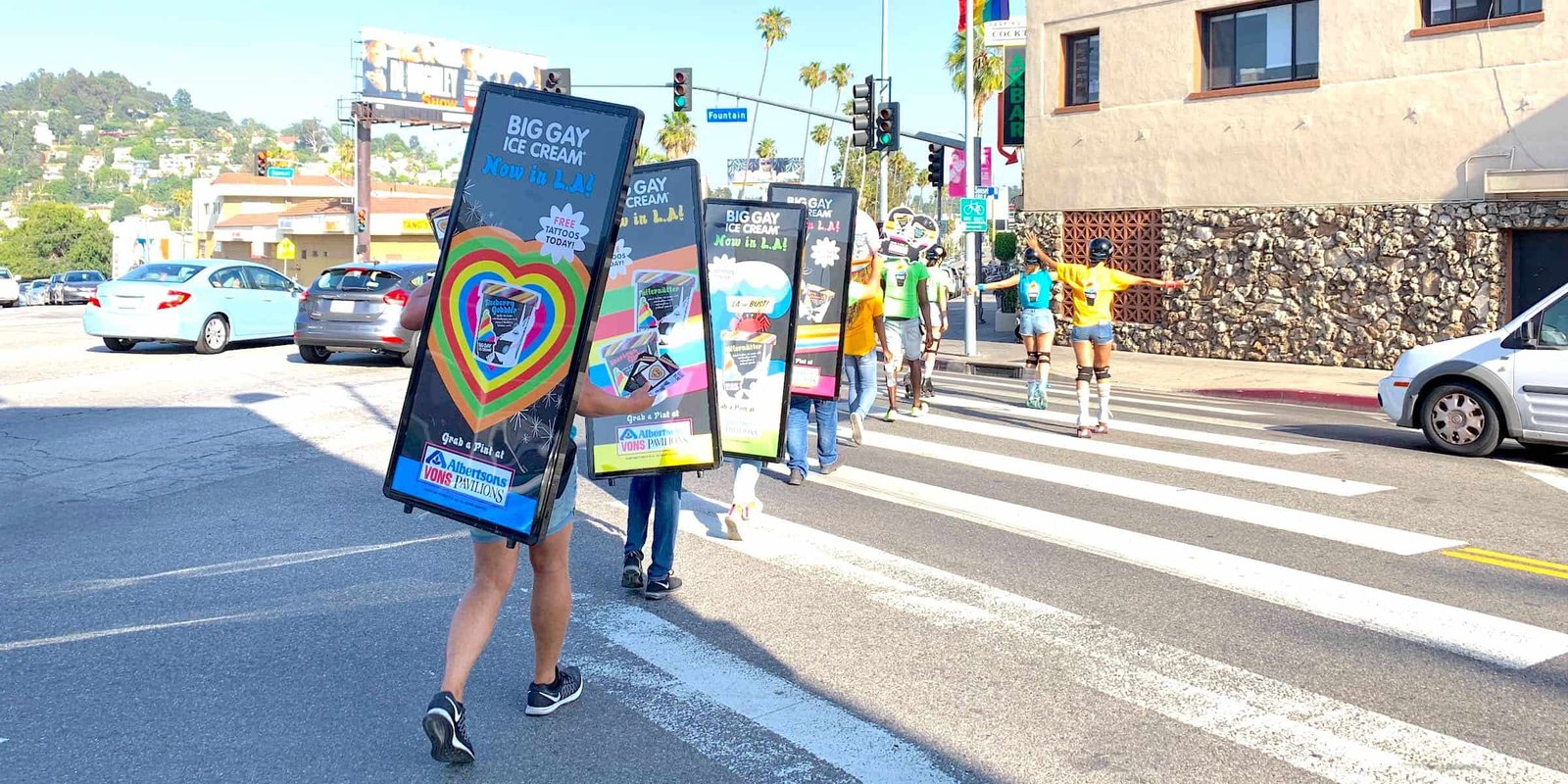
Anywhere attention is scarce, human billboard ads perform better.
Why Human Ads Build Trust Faster
Trust is the most valuable currency in advertising.
Human ads build trust because:
Faces feel accountable
Emotions feel honest
Stories feel believable
Viewers see themselves in the ad
Unlike logos, people cannot hide behind a smile, expression, or gesture.
This perceived vulnerability makes human ads feel more credible.
Trust leads to:
Higher engagement
Stronger brand loyalty
Better word-of-mouth
Increased conversions
The Role of Authenticity in Human Ads
Not all human advertising are effective.
The key is authenticity.
Authentic human ads:
- Use real people, not stock models
- Show natural expressions
- Avoid over-polished visuals
- Reflect real-life situations
- Speak in human language
Consumers can instantly detect:
- Forced smiles
- Fake testimonials
- Over-scripted performances
Authenticity is not a style—it is a strategy.
Human Ads and Storytelling: A Powerful Combination
Human ads work best when paired with storytelling.
Instead of saying:
“We are the best.”
Human ads show:
“Here’s how this product fits into someone’s life.”
Effective storytelling elements:
- A relatable problem
- A real person
- An emotional journey
- A subtle brand role
- A meaningful outcome
Stories activate emotion, memory, and trust simultaneously.
Why Human Ads Convert Better Than Logo Ads
Conversion happens when people feel understood.
Human ads:
- Address emotions
- Reduce skepticism
- Create familiarity
- Lower decision resistance
When people see someone like themselves using a product or service, it reduces uncertainty.
This is why:
- Testimonial ads convert better
- Influencer-led ads outperform brand ads
- Video ads with faces drive more sales
Human ads shorten the path from interest to action.
Human Ads in B2B vs B2C Marketing
In B2C:
- Faces create emotional connection
- Lifestyle representation drives aspiration
- Relatability increases impulse decisions
In B2B:
- Faces humanize complex services
- Leadership visibility builds authority
- Team-focused ads build credibility
- Trust accelerates long sales cycles
In both cases, people buy from people, even in corporate environments.
The Role of Diversity in Human Ads
Modern audiences expect representation.
Effective human ads reflect:
- Cultural diversity
- Gender diversity
- Age diversity
- Professional diversity
In global markets like Dubai and the UAE, inclusive human ads resonate more deeply with diverse audiences.
Representation is not just ethical—it is commercially effective.
Common Mistakes Brands Make with Human Ads
While human ads are powerful, mistakes can weaken impact.
Common errors include:
- Using generic stock photos
- Over-editing faces
- Forced emotional expressions
- Inauthentic testimonials
- Poor storytelling
Human ads must feel natural, not manufactured.
How Brands Can Transition from Logo Ads to Human Ads
Brands do not need to abandon logos entirely.
The shift is about priority, not replacement.
Smart transition strategies:
- Lead with people, support with branding
- Use faces in headlines and visuals
- Place logos subtly, not centrally
- Focus on stories over slogans
- Highlight real customers, teams, or creators
Logos should support the story—not dominate it.
The Future of Advertising Is Human-Centered
As AI, automation, and digital saturation grow, human connection becomes the ultimate differentiator.
Future advertising will be:
- Emotion-driven
- Experience-focused
- People-first
- Story-led
- Trust-based
Human ads are not a trend—they are a return to fundamentals.
Brands that understand this will:
- Build stronger loyalty
- Increase lifetime value
- Stand out in crowded markets
- Win long-term trust
Why Authentic Faces Will Always Outperform Logos
Logos represent brands.
Faces represent humanity.
In every culture, industry, and market:
People trust people
People remember faces
People respond to emotion
Human ads tap into what makes us human.
And that is why authentic faces sell more than logos—today, in 2026, and beyond.
Related Articles

Transit Media Advertising Dubai — Complete Cost Guide 2026
Published On - October 12, 2026

Bridge Banner Advertising Dubai — Costs, Locations & Campaign Guide 2026
Published On - October 12, 2026
Bridge banner advertising in Dubai starts from AED 25,000/month. Complete guide to prime bridge locations (Al Safa, Business Bay), format sizes, permit requirements, and 2026 rates.

Unipole Advertising Dubai — Sheikh Zayed Road Billboard Rates 2026
Published On - October 12, 2026
Unipole advertising in Dubai starts from AED 45,000/month. Complete guide to SZR unipole rates (AED 75,000–220,000), prime highway locations, digital vs static, and booking process 2026.




Before You Leave
Get a Free Strategy
From Dubai's Top Ad Agency
Our experts respond in 60 min — no commitment, no cost.
D
Ava · datamysite
Usually replies instantly
Powered by Claude · DataMySite