Transit media advertising in Dubai: complete 2026 cost guide covering Metro, taxi, bus, tram, airport, ferry & fleet formats. Rates from AED 3,500 (taxi interior) to AED 220,000+ (Metro train wrap).
What Is DOOH Advertising? A Simple Guide for UAE Brands
Summary:
DOOH advertising explained for UAE brands: what it is, where the screens are, what it costs in 2026, and how to plan a campaign that delivers.
July 20, 2026
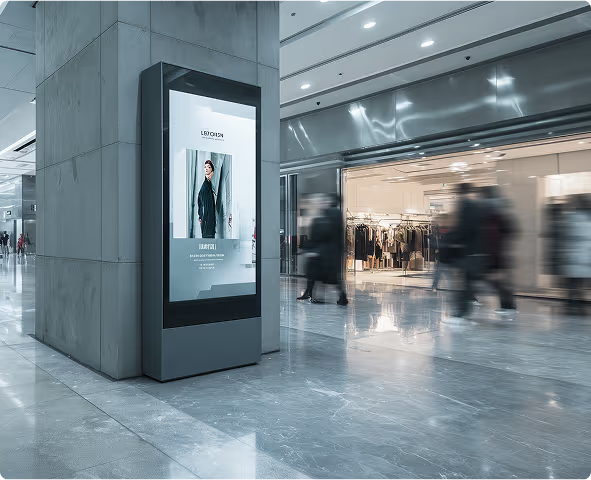
Walk down Sheikh Zayed Road, through The Dubai Mall or across a Metro platform and you'll see them everywhere — bright, high-resolution screens rotating through brand after brand. That's DOOH: digital out-of-home advertising. It's one of the fastest-growing channels in the UAE, and for many brands it's now the smartest way to reach Dubai's high-spending, always-moving audience. Here's what it is and how to use it well.
What DOOH advertising actually means
DOOH stands for Digital Out-Of-Home. It's the network of LED and LCD screens placed across the city's roads, malls, Metro stations, airports, corporate towers and petrol stations. Unlike a printed billboard, a DOOH screen shows moving, changeable content and rotates several advertisers in a loop. That single difference — digital instead of static — unlocks everything that makes the format powerful.
Why brands are shifting budget to DOOH
DOOH combines the trust and scale of outdoor advertising with the flexibility of digital. The advantages that matter most to UAE brands:
- Dynamic content — you can change the creative by time of day, run multiple messages, or update an offer without reprinting anything.
- Premium environments — screens sit in exactly the places affluent audiences pass through: DIFC, Downtown, the airport, flagship malls.
- Impression analytics — digital networks report on audience and exposure in a way static billboards never could.
- Impossible to skip — unlike online ads, a DOOH screen can't be blocked or scrolled past.
Where the screens are — and who they reach
Each environment reaches a distinct audience, and good planning starts from the audience, not the screen. Roadside screens on Sheikh Zayed Road and Al Khail Road deliver mass reach to vehicle commuters. Mall screens in The Dubai Mall or Mall of the Emirates reach shoppers at the point of purchase intent. Corporate-district screens in DIFC and Business Bay concentrate B2B decision-makers. And airport screens reach the highest-income, most international audience in the country. Define who you want first, then choose the environments that match.
What DOOH costs in Dubai in 2026
DOOH is one of the most budget-flexible outdoor formats — you can start small or go city-wide. Typical 2026 market ranges look like this:
- Entry level: from around AED 5,000–15,000 for secondary Metro stations, petrol-station screens or corporate lobby panels over a short flight.
- Meaningful campaigns: roughly AED 40,000–80,000 for a four-week multi-format or Tier-1 station programme with real reach and frequency.
- Premium roadside: AED 80,000–150,000 per month for a share-of-voice rotation on Sheikh Zayed Road, and higher for flagship LED sites.
Note that media rates rarely include creative production — budget separately for content, and remember that longer bookings and mixed premium-plus-secondary locations stretch a budget furthest. Exact pricing is always quote-based, since it depends on screen, location tier, share of voice and duration.
How to plan a DOOH campaign that works
The brands that get results follow a simple framework. Start from a clear audience description and work backwards to screen selection. Set a minimum viable frequency — UAE industry data suggests purchase intent needs three to seven exposures, so don't spread a small budget so thin that nobody sees you enough times. Keep creative bold and legible for the environment: a roadside screen has a viewer for seconds, while a mall panel allows a little more detail. And build in tracking — a campaign URL or QR code — so you can connect the screens to real business outcomes.
Is DOOH right for you?
If your audience moves through Dubai — commuting, shopping, travelling — DOOH is one of the best cost-to-impact channels available, and it scales from a modest test to a city-dominating campaign. The key is matching the screens to your audience and giving the campaign enough frequency to land.
DOOH vs static billboards
The obvious question for any outdoor advertiser is whether to choose DOOH or a traditional static billboard. Static billboards offer constant, uninterrupted presence — your ad is the only thing on that structure, all day, every day, which can be more cost-effective for long-term brand building. DOOH shares its screen time with other advertisers in a rotation, but gains flexibility, motion, dynamic content and analytics in return. Neither is simply better; the right answer depends on your goal. For a sustained, always-on brand presence, static can win on cost-per-day. For flexible, targeted, measurable campaigns with changeable creative, DOOH is the stronger tool. Many brands use both together.
The rise of programmatic DOOH
One of the biggest shifts in the UAE market is programmatic DOOH — buying digital screen space automatically, much like online advertising, and even triggering different creative based on conditions like time of day, weather or traffic. This brings the precision and efficiency of digital media buying to the physical world, letting brands optimise which screens show their ad and when. For advertisers, it means less wasted spend and more relevance, and it's a major reason DOOH budgets in Dubai continue to grow.
Getting your creative right for DOOH
Great DOOH creative respects the environment. Roadside screens have a viewer for a few seconds at speed, so the message must be instant — a bold visual, minimal words, strong branding. Mall and lobby screens allow slightly more detail because dwell time is longer. Motion is a gift: subtle animation draws the eye in a way static never can, but overloading the screen defeats the purpose. Above all, design for the specific screen and audience rather than repurposing a print ad, and your DOOH campaign will work far harder for the same money.
The direction of travel is clear: as more of Dubai's public and retail space goes digital, DOOH is becoming the default way brands own attention in the physical world. The screens are multiplying, the targeting is getting sharper, and the analytics keep improving. For a brand deciding where to put its outdoor budget today, that momentum matters — DOOH is not a passing trend but the format the market is steadily moving toward. Start with a clearly defined audience, choose the environments where they actually are, give the campaign enough frequency to land, and build in tracking from day one. Do that, and DOOH delivers a rare combination in advertising: the scale and credibility of outdoor with the precision and accountability of digital.
Ready to put your brand on Dubai's best screens? See our DOOH advertising services and get a plan built around your audience and budget.
Related Articles
Transit Media Advertising Dubai — Complete Cost Guide 2026
Published On - October 01, 2026
Bridge Banner Advertising Dubai — Costs, Locations & Campaign Guide 2026
Published On - October 01, 2026
Bridge banner advertising in Dubai starts from AED 25,000/month. Complete guide to prime bridge locations (Al Safa, Business Bay), format sizes, permit requirements, and 2026 rates.
Unipole Advertising Dubai — Sheikh Zayed Road Billboard Rates 2026
Published On - October 01, 2026
Unipole advertising in Dubai starts from AED 45,000/month. Complete guide to SZR unipole rates (AED 75,000–220,000), prime highway locations, digital vs static, and booking process 2026.




Before You Leave
Get a Free Strategy
From Dubai's Top Ad Agency
Our experts respond in 60 min — no commitment, no cost.
D
Ava · datamysite
Usually replies instantly
Powered by Claude · DataMySite